
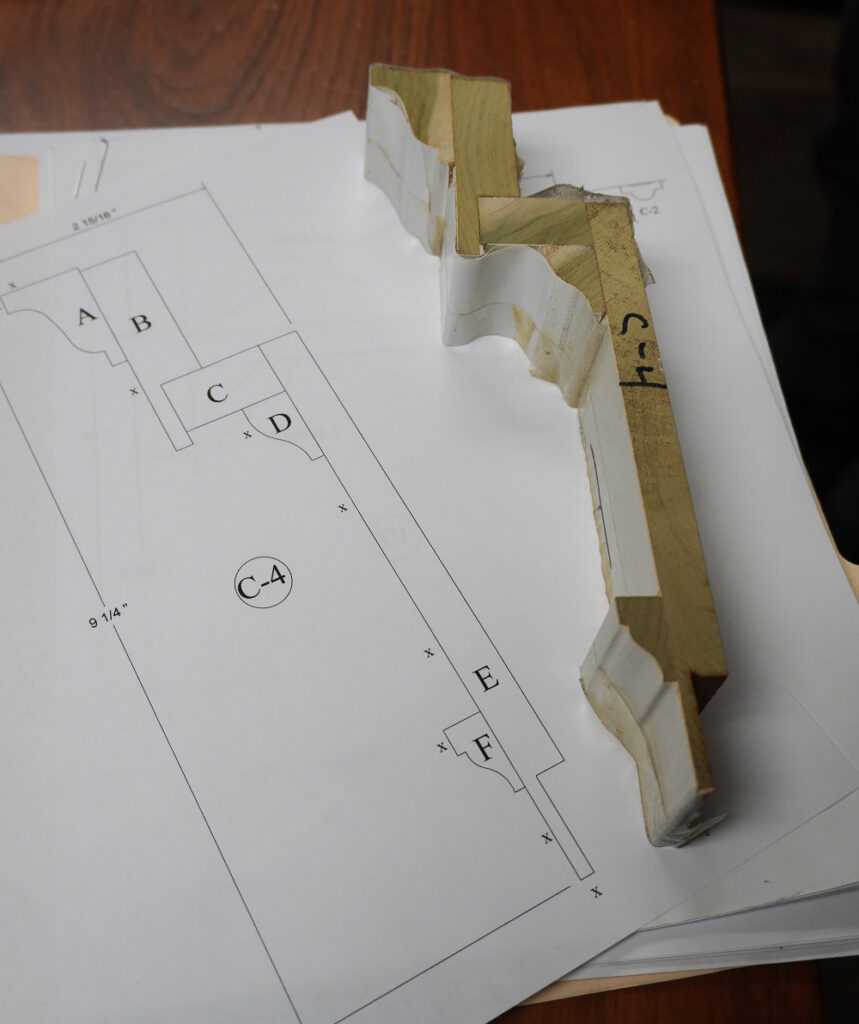
When an architect specifies a 14-inch crown profile with period-correct depth and shadow lines, a single moulder knife cannot cut it. The physics of wood, knife geometry, and machine clearance make large-scale classical profiles mechanically impossible as a one-piece run. The projects still need to be built. The question becomes how well the seams disappear, how accurately the components register, and how quickly the assembly arrives on site. Boyce Highlands engineers multi-part moulding build-ups that read as one continuous piece, with aerospace-level precision on every interlocking component and compressed delivery timelines that protect your project schedule.
Why Architectural Projects Require Build-Ups
Premium institutional work, corporate headquarters commissions, restoration projects, and upper 1% residential interiors share a common specification challenge. Crown assemblies regularly exceed 12 inches of projection. Cornices stack three, four, or seven components. Door and window casings layer backbands, plinth blocks, and applied mouldings that must align across hundreds of openings. One of our active corporate headquarters commissions required more than 5,000 panels assembled in sections up to 50 feet long. A project of that scale cannot be solved with catalog profiles and field assembly. It demands engineering discipline starting at the rough lumber stage.
We approach every multi-part build-up the same way our customers approach their own high-stakes projects. Start with the finished elevation. Work backward to the component breakdown. Verify that each piece can be milled, handled, shipped, and installed without losing registration. Design the hidden joinery so your field crew can set the assembly in minutes instead of hours.
The Engineering Behind Invisible Seams
One recent case study involved a multi-family residential project in Hollywood where a partner shop faced a 2,000-unit door casing install with unrealistic site labor hours. The original specification called for a seven-piece built-up casing assembled on site. Our engineering team redesigned the build-up into pre-assembled subcomponents with hidden spline joints, reducing install time from 35 minutes per opening to five. The casings still read as a seven-piece period-correct profile. The installers never touched a miter saw on site.
That is the philosophy behind every build-up we deliver. The seam location, the registration detail, the finish match across components, and the packaging sequence all get engineered together. Your shop foreman and your installers see a finished product. Your project manager sees the schedule protected. Your architect sees a profile that meets the original design intent without compromise.
Build-Up Profile Types We Engineer
- Stacked crown mouldings exceeding 14 inches of projection
- Multi-piece cornice assemblies with frieze and soffit integration
- Period-correct casings with backbands, plinth blocks, and applied details
- Wainscot and panel mould assemblies with integrated chair rail and base
- Ceiling medallion surrounds and coffered ceiling assemblies
- Historic replication build-ups matched to existing field samples
Get answers from 80+ years of combined experience on your next build-up assembly
Equipment and Precision That Make It Possible
The seams disappear because the components are manufactured to aerospace-level tolerances of 5 to 7 thousandths of an inch. Our two precision molders (Weining Molder and a Kentwood Molder), supported by continuous technical training from German engineers, runs knives ground in-house on our custom knife grinder. That integration of knife grinding, premium lumber, and precision moulding is what allows us to hold tolerances across thousands of linear feet of interlocking components.
Every build-up order gets test-fit before it leaves the plant. We verify registration on the paddle wheel assembly system, check finish match under production lighting, and pack components in installation sequence so your crew can work from a single carton instead of hunting for mating pieces across a jobsite trailer.
What You Get With Every Build-Up Order
- CAD drawings of the complete assembly and each component
- Shop drawings showing hidden joinery and installation sequence
- Test-fit verification before shipment
- Customized packaging, organized by floor or room
- Factory furniture finish applied before delivery when specified
- Matched fiber pulled from the same lumber run for consistent grain and color
Compressed Timelines Without Compromise
Multi-part build-ups are often the last trade called in at the end of a project. The timeline has collapsed from three months to three weeks. The architect still expects the profile exactly as specified. The general contractor still expects zero punch-list issues at closeout. That is exactly the scenario our plant is built to solve. Our ninja speed on architectural millwork means we can engineer, mill, finish, and ship a full multi-part build-up package in three to five weeks while competitors quote three to four months. We do not trade speed for precision. The tolerances get tighter, not looser, when the clock is running.
A Partnership Approach
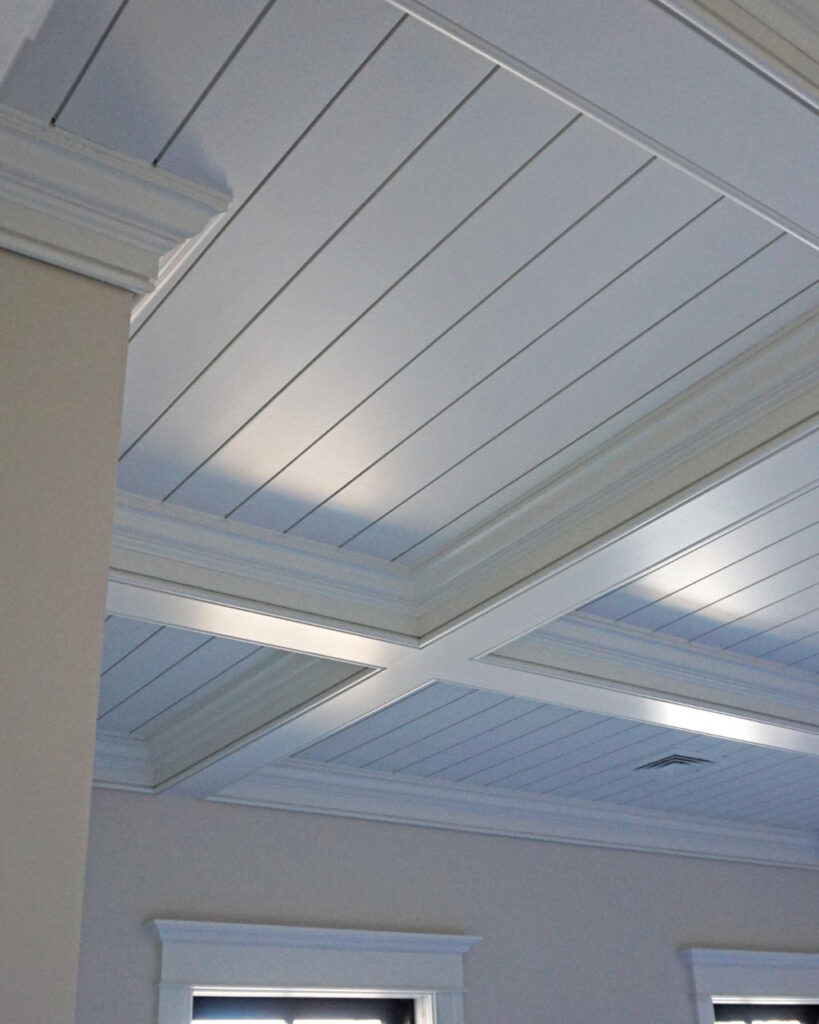
We do not treat multi-part build-ups as a commodity product line. They are the kind of work that defines a project’s final impression and your reputation. That is why we treat every build-up order as an extension of your shop rather than a parts shipment. Our engineers review your shop drawings, flag conflicts before they become callbacks, and suggest component breakdowns your installers will thank us for. The result is a build-up package that reads as a single piece on the wall, ships faster than the industry standard, and protects both your schedule and your margin.